

2026-07-31
PROVINCE INVESTS IN COMMUNITY-BASED SENIORS CARE THROUGH INNOVATIVE NEW PROGRAM AT DEEP RIVER AND DISTRICT HEALTH
Deep River and District Health (DRDH) is proud to announce that it has been selected as one of Ontario’s newest Community Access to Long-Term Care (CALTC) pilot sites, bringing a new model of community-based care to the Upper Ottawa Valley that will help seniors remain healthy, connected, and independent while living at home.
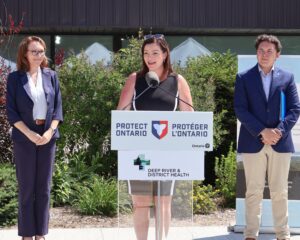
The announcement was made today by the Honourable Natalia Kusendova-Bashta, Ontario’s Minister of Long-Term Care, alongside MPP, Renfrew-Nipissing-Pembroke Billy Denault during a visit to the DRDH Health Campus.
The provincial investment will enable DRDH to deliver a locally-designed model of care that reflects the unique needs of rural communities and the priorities identified by local seniors, caregivers, patients, healthcare providers, municipalities, and community organizations.
While the Community Access to Long-Term Care program provides the provincial framework, DRDH has designed its own local approach, The Campfire Program, to ensure services reflect the realities of aging in the Upper Ottawa Valley.
Over the past several years, DRDH engaged extensively with patients, families, community organizations, healthcare partners, municipal leaders, and residents to better understand what would help people remain living independently for longer. Throughout those conversations, one message was clear: people were looking for more than healthcare. Identified needs included opportunities to stay active, maintain social connections, access trusted advice, navigate available services more easily, and continue participating in the community.
The Campfire Program has been built around those priorities.
Operating from the main Deep River and District Health Campus, the program will bring together clinical care, wellness programming, recreation, dementia supports, caregiver education, health promotion, service navigation, and meaningful opportunities for social connection in one welcoming community space.
“The Province’s investment gives us the opportunity to create something that has been designed by our community, for our community,” said Janna Hotson, President and Chief Executive Officer of Deep River and District Health. “Through our conversations with residents and partners, we heard that helping people remain at home requires much more than healthcare alone. It requires connection, purpose, education, navigation, and relationships. The Campfire Program brings those pieces together into one integrated model that reflects the needs of people living in rural communities.”
The Campfire Program takes its inspiration from one of the oldest symbols of community- a tradition that is deeply familiar across the Ottawa Valley. Whether gathered at a cottage, around a backyard fire, or on a campsite, campfires have brought neighbours, families, and friends together to connect, share stories, learn from one another, and support each other. Like a campfire, the program is intended to be a welcoming place where people come together for a time – to build relationships, access support, learn new skills, improve their health, and strengthen their independence – before returning home. It reflects the character of our rural region and our belief that gathering neighbours builds stronger, healthier communities. “The Campfire isn’t where people stay,” said Hotson. “It’s where connections are kindled. It’s a place where neighbours gather, where support is shared, and where people leave stronger, healthier, and better connected than when they arrived.”
Once fully established, The Campfire Program will continue to evolve alongside community needs, offering access to recreation and wellness programming, selected clinical services, caregiver supports, dementia resources, educational opportunities, volunteer engagement, and partnerships with local organizations that promote healthy aging and reduce social isolation.
The program also complements the DRDH Foundation’s Get on Board transportation campaign, which is raising funds for accessible transportation that will help connect seniors across the region with programs and services offered through the DRDH Health Campus. Reliable transportation will ensure people from throughout the Upper Ottawa Valley can participate regardless of where they live.
As part of today’s visit, Minister Kusendova-Bashta and MPP Denault toured the new Four Seasons Lodge, currently under construction, and visited the campus spaces that will support the initial launch of the program.
“The Community Access to Long-Term Care program is helping us rethink what long-term care can look like,” said Hotson. “Instead of waiting until someone needs long-term care, we have an opportunity to support people earlier to help them remain healthier, more connected, and more independent. This investment allows us to build a model of care that reflects who we are as a community and strengthens the health of our region for years to come.”
Additional information regarding eligibility, referral pathways, programming, and community participation in The Campfire Program will be shared as services are introduced over the coming months.