
2026-08-17
DRDH HOSTS EMERGENCY PREPAREDNESS EXERCISE WITH COMMUNITY PARTNERS
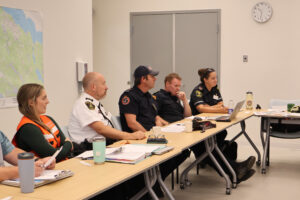
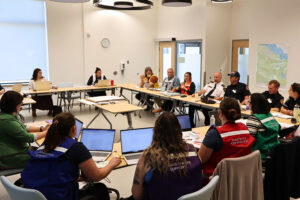
Deep River and District Health (DRDH) recently brought together its Incident Management Team and local emergency response partners for a tabletop exercise focused on strengthening preparedness for a complex community emergency.
Facilitated by DRDH’s Chief Nursing Executive Meagen Boisvenue, the August 12th exercise included representatives from the Deep River Fire Department, Deep River Police Department and County of Renfrew Paramedic Service, alongside members of DRDH’s Incident Management Team.
The exercise worked through a simulated Code Orange – External Disaster, beginning with a rapidly escalating forest fire approximately 12 kilometres outside of Deep River. As the scenario unfolded, participants were challenged to respond to worsening smoke and visibility, a potential community evacuation, shelter-in-place requirements, a highway closure, a multi-vehicle collision, as well as increased demand on the Emergency Department and ambulance delays. The scenario also tested the potential impacts of a prolonged emergency on staffing, supplies, transportation, communications and hospital infrastructure.
“Practicing our response before an emergency happens is one of the most important things we can do to prepare,” said Meagen Boisvenue, Chief Nursing Executive at DRDH. “Exercises like this give us the opportunity to test our plans, identify where we can strengthen our response and, most importantly, practice working alongside our community partners. Emergency preparedness is a shared responsibility, and strong partnerships help ensure our response is resilient, coordinated and focused on keeping our patients, residents, staff and community safe.”
Throughout the exercise, participants demonstrated strong situational awareness and clinical decision-making, quickly established leadership roles using the Incident Management System and Emergency Operations Centre structure, and worked through shelter-in-place, staffing escalation and patient-flow processes. Teams also considered the availability of critical resources such as oxygen and supplies, transportation challenges, HVAC systems and staff wellness.
A key learning from the exercise was the importance of acting early, scaling the response quickly and continually reassessing as circumstances change. Participants also emphasized that emergency planning must look beyond the immediate response to consider how services, staffing and resources can be sustained into the following days of a prolonged event.
The exercise identified several opportunities that will inform DRDH’s ongoing emergency preparedness work, including strengthening backup communication methods, maintaining current emergency contact information, planning for prolonged staffing needs and staff wellness, better understanding smoke and air-quality impacts, and ensuring paper-based resources are available if cellular or technology systems are disrupted. Participants also identified the importance of planning early for essential supplies such as food, water, oxygen and medications.
Overall, the exercise demonstrated a strong foundation for responding to a complex community emergency and reinforced the importance of collaboration between DRDH and its emergency response partners. Future exercises will build on these lessons, with opportunities to involve more staff and additional health and community partners.
Regular exercises such as this are part of DRDH’s ongoing commitment to emergency preparedness – turning lessons learned through practice into practical improvements that strengthen the resilience of the Health Campus and the community it serves.